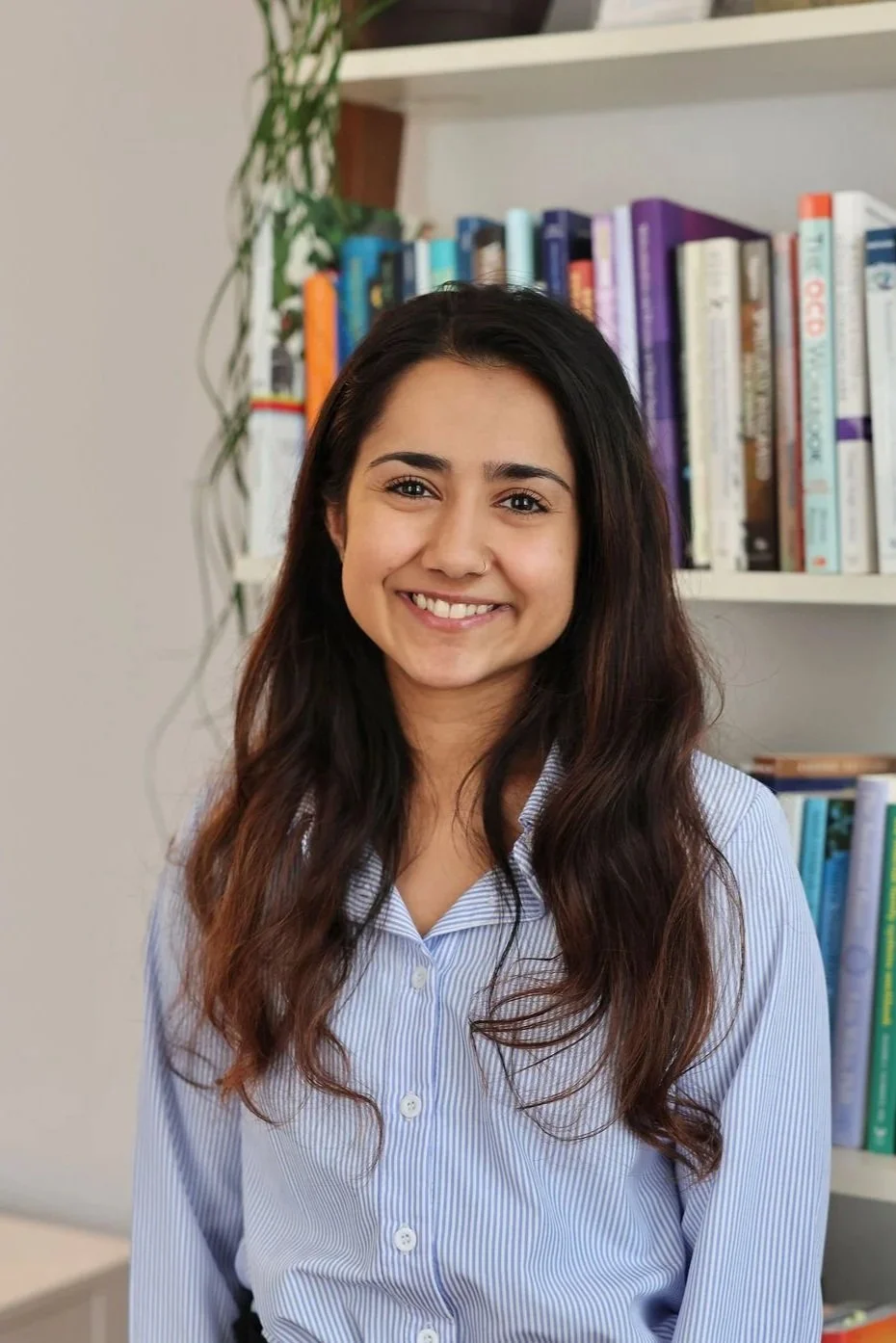
Meet Sanjita Ekhelikar, PsyD
Staff Psychologist (NY)
Specialties: emotion regulation, perfectionism, trauma, relationships, body image, and BIPOC & LGBTQIA+ mental health
Offering In-Person & Online Therapy
Getting to know Dr. Sanjita Ekhelikar
How would you describe the way you work?
I care deeply about working with highly sensitive people who spend so much energy holding things together for others that their own needs have fallen to the bottom of the list. Maybe you’re used to being the anchor for everyone else - the family member or friend offering a listening ear, the community activist pushing for change, or the high-achieving professional trying to keep things afloat. I hold space for the deeply human struggles you may hide from others, whether that’s the dysregulation that flares up in an argument with your partner, the self-defeating pressure of doing things “perfectly” in every space you are in, or the frustrating thoughts about your body that just never seem to go away.
My practice is rooted in a trauma-focused approach, which means that we will explore how past hurts shape your self-worth, daily routine, and current relationships. With me, that includes processing the real impact of systemic oppression on your emotional wellbeing - whether you are experiencing subtle sexism in corporate meetings, body size discrimination, or non-affirming care in medical settings. I want you to feel heard and seen as we center your empowerment with compassion.
I recognize that starting (or restarting) therapy can feel scary. My priority is to create a space that is warm, relational, and goes at your pace for growth and healing. To help you move from surviving to groundedness and self-compassion, I incorporate practical tools catered to your goals. Some examples of this include: learning tools to self-advocate and set boundaries without losing yourself; examining how hypercritical self-talk may reflect multigenerational patterns and isn’t just you; slowing down so you reconnect with yourself and your body; and unpacking deep-seated, painful beliefs through guided reflection and creative writing.
I believe that therapy is successful when we actively collaborate. I like to ask a lot of questions to help us uncover patterns, teach skills, and come up with thoughtful reflections or exercises between our sessions if you are interested. I’ll ask for your thoughts and feedback on how our sessions are feeling to ensure therapy feels supportive and helpful. Above all, you can expect me to keep your core values and beliefs at the forefront, and be culturally mindful and respectful of your whole self.
How do you approach identity and culture as a therapist?
I prioritize an anti-oppressive, multicultural lens in my therapy work. This means that we don’t just look at what you are feeling; we look at how the systems you live in impact your daily life, view of self, view of your body, and relationships. I’ll create an affirming and nonjudgmental space where we can focus on your identities (e.g. race, ethnicity, LGBTQIA+, gender, age, religion, neurodivergence) and experiences and connect this with your goals of healing. I’m also interested in hearing about how some of your combined or intersecting identities may feel for you. You are the expert on you, and I hope to create a space where we can both learn about what your identities may mean to you.
As a BIPOC therapist, specifically an Indian American child of immigrants, I understand and recognize the impacts of racism and bias and the ways this can hurt. I am also aware of the unique struggles that individuals who are navigating bicultural identities and intergenerational conflict may face. I’m deeply interested in supporting folks who may struggle in the face of prejudice, especially cross-cultural conflicts, familial concerns, and racial stress.
In tandem with addressing the concerns you bring to therapy, I hope to help you see how sometimes various "symptoms" are really mechanisms of coping with oppression. Things like perfectionism, underestimating or demeaning ourselves, internalizing negative views and biases, and not trusting ourselves are some of the many ways our minds and bodies try to cope with the impacts of larger social problems. We will always use our sessions in a way that supports your thriving, individually and in the world.
What can you help me with?
Anger
Anxiety (e.g. social anxiety, generalized anxiety, specific phobias, panic attacks)
Body image
Eating (difficult attitudes or behaviors with eating)
Emerging adulthood (18 year old+, post-graduation)
Interpersonal dynamics and relationship difficulties (e.g. attachment issues, relational conflict, divorce or separation, family relationships, communication difficulties, boundary setting)
Life transitions (e.g. career-related transitions, separation/breakups, moving)
Multicultural identities (e.g. BIPOC identity, 2nd gen, bicultural identity, LGBTQIA+)
Neurodivergent affirming therapy
Self-esteem
Sleep (e.g. insomnia, sleep hygiene, CBT-I)
Trauma (e.g. sexual trauma, childhood abuse, military trauma, PTSD/CPTSD, race-based trauma)
Work stress and career direction
What types of therapy do you use?
Acceptance and Commitment Therapy (ACT)
Cognitive Behavioral Therapy (CBT)
Cognitive Processing Therapy (CPT)
Dialectical Behavioral Therapy (DBT)
Exposure-based Therapy
Internal Family Systems (IFS)
Interpersonal Therapy (IPT)
Mindfulness-based techniques
Multicultural Therapy
Dynamic Interpersonal Therapy (DIT)
Psychodynamic Therapy
Trauma Therapy
What’s your session fee?
I am an out of network provider and my fee ranges from $300-325/session. As a therapist committed to equitable access to therapy, I also have a small number of sliding scale spots that you can ask about.
Our practice has partnered with Mentaya - a service that can check what out of network insurance benefits you have for therapy and provide an immediate estimate. Check here.
Education & Professional Training
Dr. Sanjita Ekhelikar earned both her doctorate and master's degree in clinical psychology from Loyola University Maryland, and completed her bachelor's degree in cell biology and neuroscience from Rutgers University. She is also a clinical supervisor for the Counseling Psychology doctoral program at Columbia. Dr. Ekhelikar specializes in anxiety, depression, relationship issues, perfectionism, and body image concerns. She also has extensive experience working with adults struggling with the effects of personal trauma, intergenerational trauma, or racial trauma. Dr. Ekhelikar possesses advanced training in Cognitive Behavioral Therapy, Interpersonal Therapy, and Dialectical Behavior Therapy. She is passionate about helping people live by their personal values and deepen trust and compassion in themselves. Overall, she approaches emotional wellbeing with multicultural psychology and social justice at the forefront, and works from a place of empowerment, empathy, and creativity.
Dr. Ekhelikar has conducted research focusing on body dissatisfaction and disordered eating. She is keenly interested in bicultural identity and therapy for second-generation adult children of immigrants, as well as affirming LGBTQIA+ mental health. Prior to joining the practice, Dr. Ekhelikar trained in community mental health centers, private practices, and Veteran Affairs medical hospitals in Baltimore and in NYC. She is a member of Psi Chi, the national honor society for psychology. Dr. Ekhelikar loves dancing, live music, dogs, scenic views, and traveling.